THE FACTS
TALAAT Would Have been Ataturk.
Instead, it was Kemal, thanks to Tehlirian.
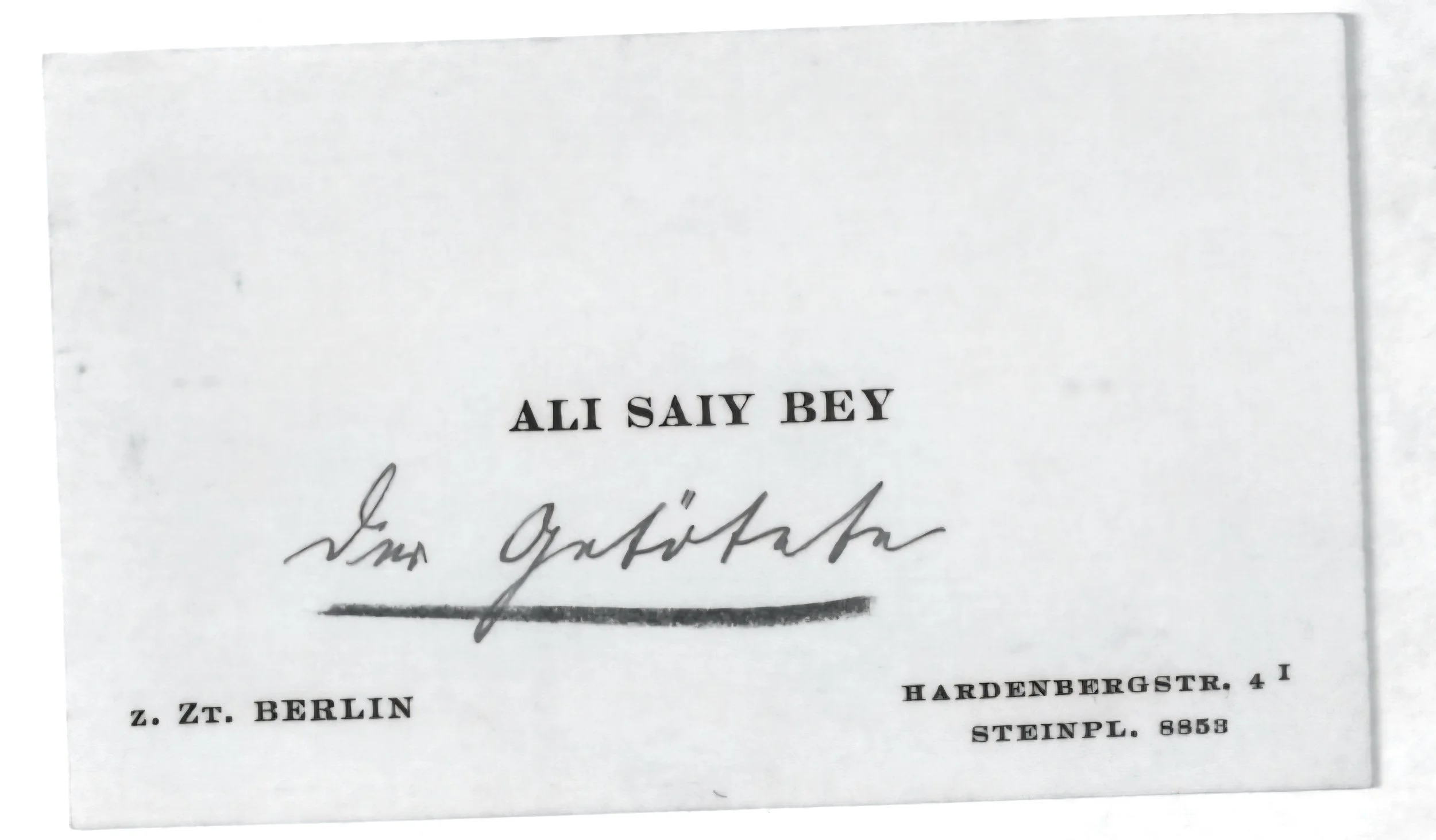
After the allies prevailed in WW1, “Ali Saiy Bey” made his way to Germany, via Geneva, with the entirety of the Ottoman treasury in his possession, opening a bank account or two, but not under the name Ali Saiy. His true identity was Mehmet Talaat, the heir apparent, in the eyes of Young Turk loyalists, of the top spot, Ataturk (“father of the Turks” or “Ancestor Turk”)… which eventually went to Mustafa Kemal.
Heir apparent or not, the truth is Talaat was a product of his own ambition. He served as the Minister of the Interior, the most powerful position in the Ottoman Government during the war. He eventually ascended to the top political position, Grand Vizier. Behind the scenes he relished the latest trending philosophies that heralded him as a savior figure, even an embodiment of Nietzche’s “ubermensch.” Talaat was egomaniacal and charismatic. He believed his own press, but “inconveniently” ended up on the wrong side of the conflict. He escaped prior to a death sentence pronunciation on his head, emptying the treasury in the process.
Talaat was well on his way to ingratiating himself to foreign diplomats and former enemies as he bided his time. Soghomon got to him first, and at the founding of the republic of Turkey the top title went to the next in line, General Mustafa Kemal. The glorious poetic justice in Talaat’s story is the fact that this “prime specimen,” the most evolved Turk, would never procreate. His seed was dead. He was impotent. No babies for you, Mehmet, murderer of millions.
On this day (June 3, 2026) 105 years ago, Soghomon Tehlirian was acquitted for killing Talaat. 6 years ago (on the 99th anniversary) Michael and Armen launched a podcast called “Hollywood & History.” Here is the first episode.
Posted: MARCH 22, 2026
“My MoThER’s Ghost”
Soghomon would spend just over 11 weeks in jail awaiting trial. He turned 25 on April 2, without even a mention in his Prison Diary. A month later, on Sunday, May 1st, Soghomon would be visited by the prison Chaplain. He spoke almost no German, and the Chaplain even less Armenian, but they both had a bit of conversational French in their repertoire, Soghomon having spent time as a cobblers apprentice in Paris. He listens dutifully to the minister’s homily and seems appreciative
for the visit. Most significantly, the Chaplain would see to it that Soghomon received an Armenian language Bible. The grandson of a Protestant preacher, and a son of the first Christian nation, it was a welcome familiar tome. He plunged in immediately and even ponders that the Beast of St. John’s Revelation might have been the very man he felled.
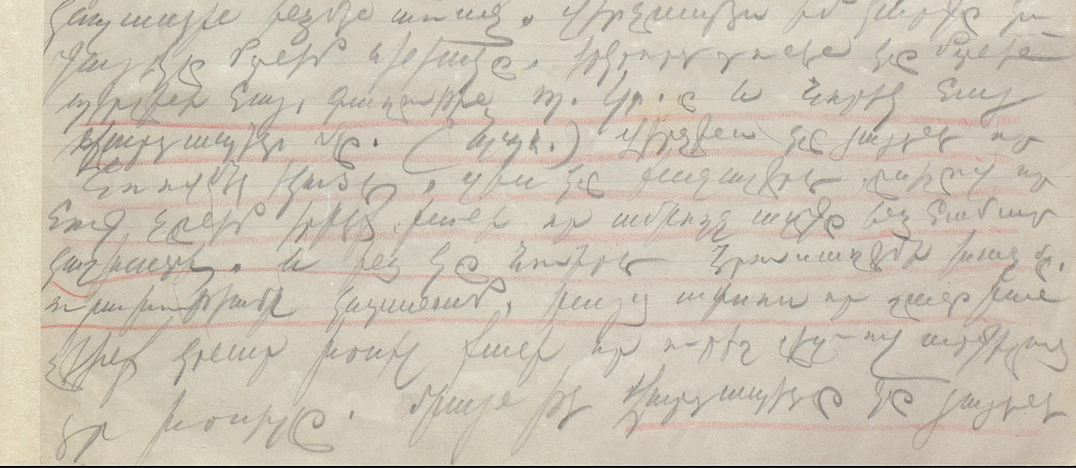
Three days later (May 4) he receives another Holy man in the prison visiting room, a “Vartabed” (Armenian Apostolic Priest), who gifts him a Jerusalem Cross. In the Vartabed’s own memoir he claims to have written a poem while in “Tehlirian’s very prison cell.” Perhaps he mistook the visiting room for the cell, but the subject of the poem seems to confirm sentiments Soghomon would testify to in the trial. The poem, titled “The Armenian Mother Speaks to Her Son” concludes with the line “You will not be my son, nor a hero, if you do not spill the blood of this executioner.” A month later, Tehlirian would testify that his mother’s ghost appeared to him and had guided him to this fate. Indeed, in his memoir, Soghomon recounts with regularity a number of encounters with those “beyond the grave” including his mother, his brother, and even former comrades from his military unit. It would fall to clinical experts to testify to the reasonableness of such claims. The following excerpt from the trial testimony likely held some sway over the ultimate verdict.
June 2, 1921, Berlin
PROFESSOR DR. LIEPMANN:
“I found the defendant to be a man of rare sincerity. He did not resort to any histrionics. On the contrary, he was very reserved. There is a certain resignation about him, such that, no matter what happens, he no longer has any interest in living. It is perfectly clear that we are not dealing here with the act of an insane person. It is also clear that the act was not committed while the defendant was in a confused state of mind, such as during an epileptic attack. On the contrary, we have to delve into an area we are not too well acquainted with — the pathology of the human mind.
I believe him when he says that those recollections took physical form; he could see them and smell the stench of the corpses. In my opinion, these attacks are the expression of severe psychic shock. No matter what we asked Tehlirian — Did he consider himself competent to commit the killing? Did he consider himself competent to play the role of judge? — his answers were always the same, i.e., that his mother had obligated him to perform the act of killing and hence there was no further question as far as he was concerned. I asked him whether or not being a Christian presented an obstacle to him. He told me he was well aware that Christianity prohibits killing but after seeing a vision of his mother he knew that he was on the right track. His vision of his mother was an all-powerful force, thus making any further argument pointless.”
Posted: MARCH 15, 2026
Soghomon TEHLIRIAN
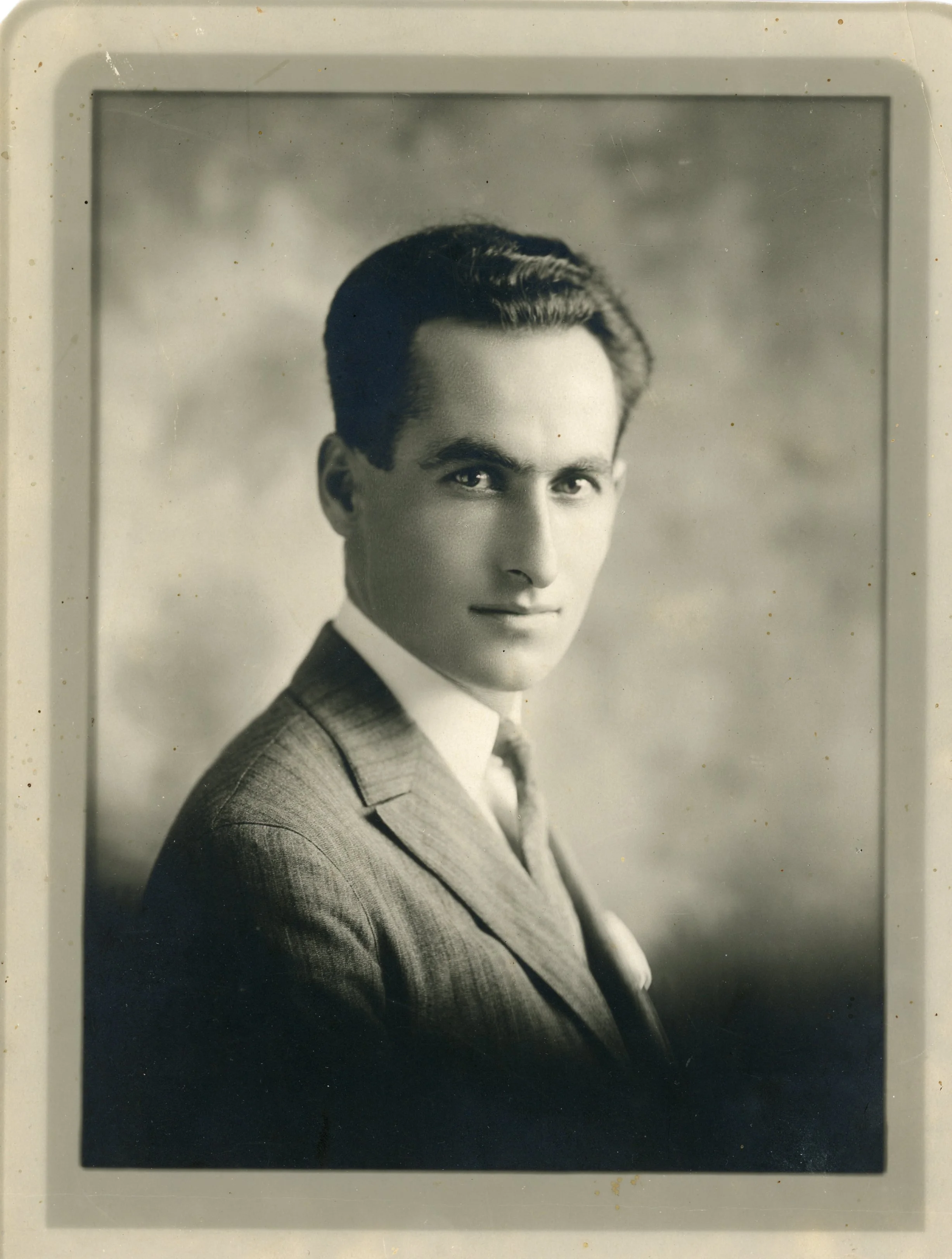
On March 15, 1921, in the Charlottenburg District of Berlin, foreign “engineering student” Soghomon Tehlirian gunned down Ali Saiy Bey, a diplomat from his home country, the Ottoman Empire. Ten weeks later Soghomon was acquitted.
This is his story.
The bullet had entered Ali Saiy Bey’s skull just behind the left ear, and exited above the left eye, leaving a 5 cm x 6 cm hole. At roughly 11 a.m. he fell face-first at full impact onto the concrete sidewalk located at 17 Hardenbergstrasse. In his memoir, Soghomon described that “black, thick blood at once pooled around his head, as though oil gushing out of a broken pot.” The autopsy report detailed a brain “swimming in blood” indicating that it had exploded, resulting in liquefaction.
Suffice it to say, Saiy Bey’s demise was violent, gruesome, and instantaneous. Face and skull crushed on concrete made visual identification impossible, and guaranteed a closed casket.
Officers arrived in minutes to two separate locations; the first, Saiy’s dead body, and the second, just around the corner (south on Fasanenstrasse), where Soghomon endured the brutality of an incensed mob. The ‘good citizens’ believed him a terrorist who had just ruthlessly murdered a German war hero. Ironically, Soghomon’s arrest by police was his rescue from certain death.
In the rush to publish, the next day’s New York Times, relying on a special cable from Berlin, got numerous details wrong. It reported that Soghomon had tapped Saiy on the shoulder and “pretended to claim acquaintance with him”, that Saiy’s wife had been present, and that she had been injured. None of these had any basis in fact. Additionally, in a followup article (March 17), “Saiy” was misrendered as “Sali” and the following day (March 18), the Times rendered it as “Saïd.” Of course, by that time “Ali Saiy Bey” was known to be an alias. His true identity had sent shockwaves around the world.
Exactly who had Soghomon gunned down, and why?