The Archive
Posted: MARCH 22, 2026
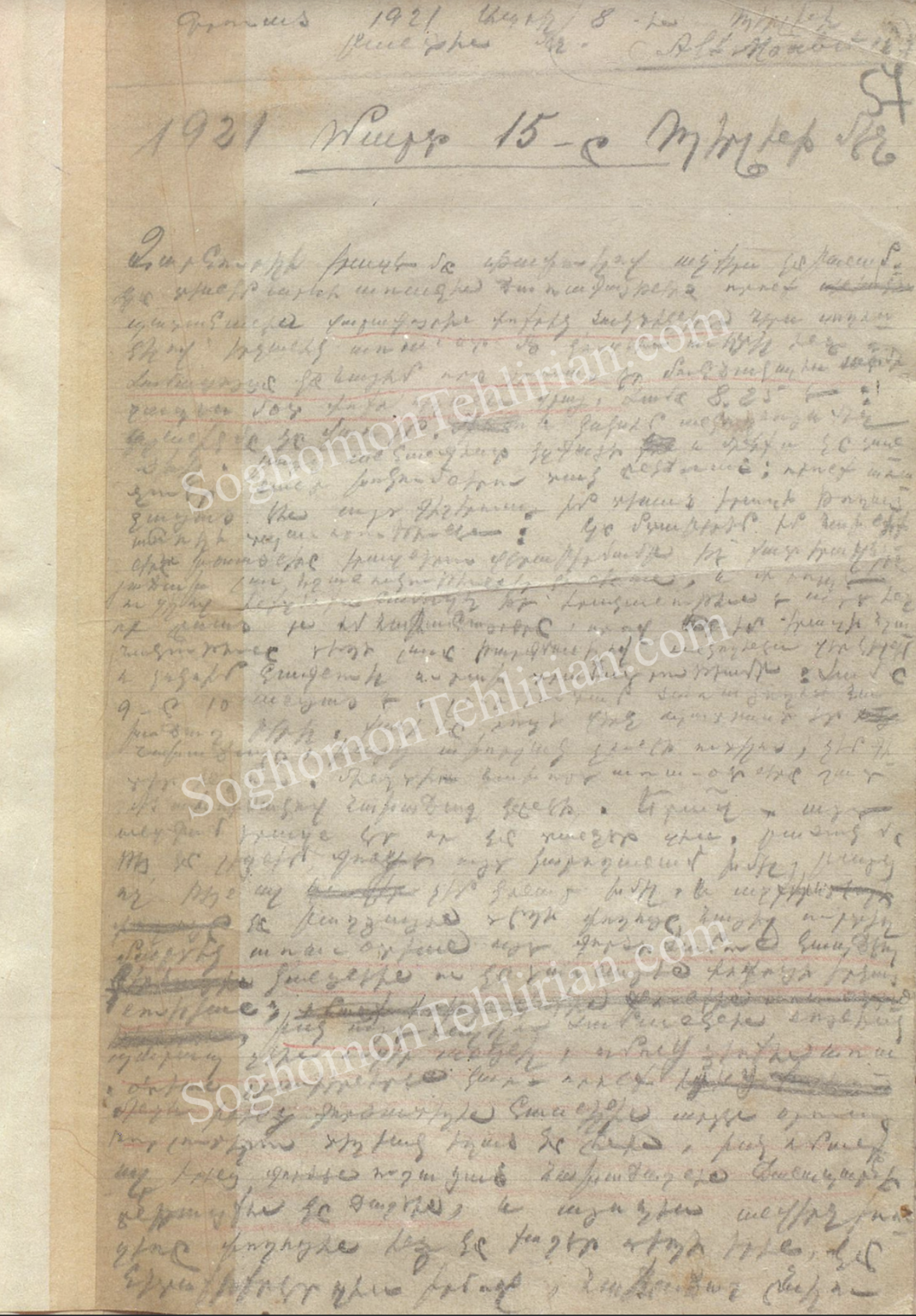
Page 1 of Soghomon Tehlirian’s Prison Diary. Written on April 8, 1921, the day he first received pencil and paper, in the “Berlin City Jail.”
Soghomon describes a fateful morning three weeks earlier, March 15, the day of the assassination and of his subsequent arrest.
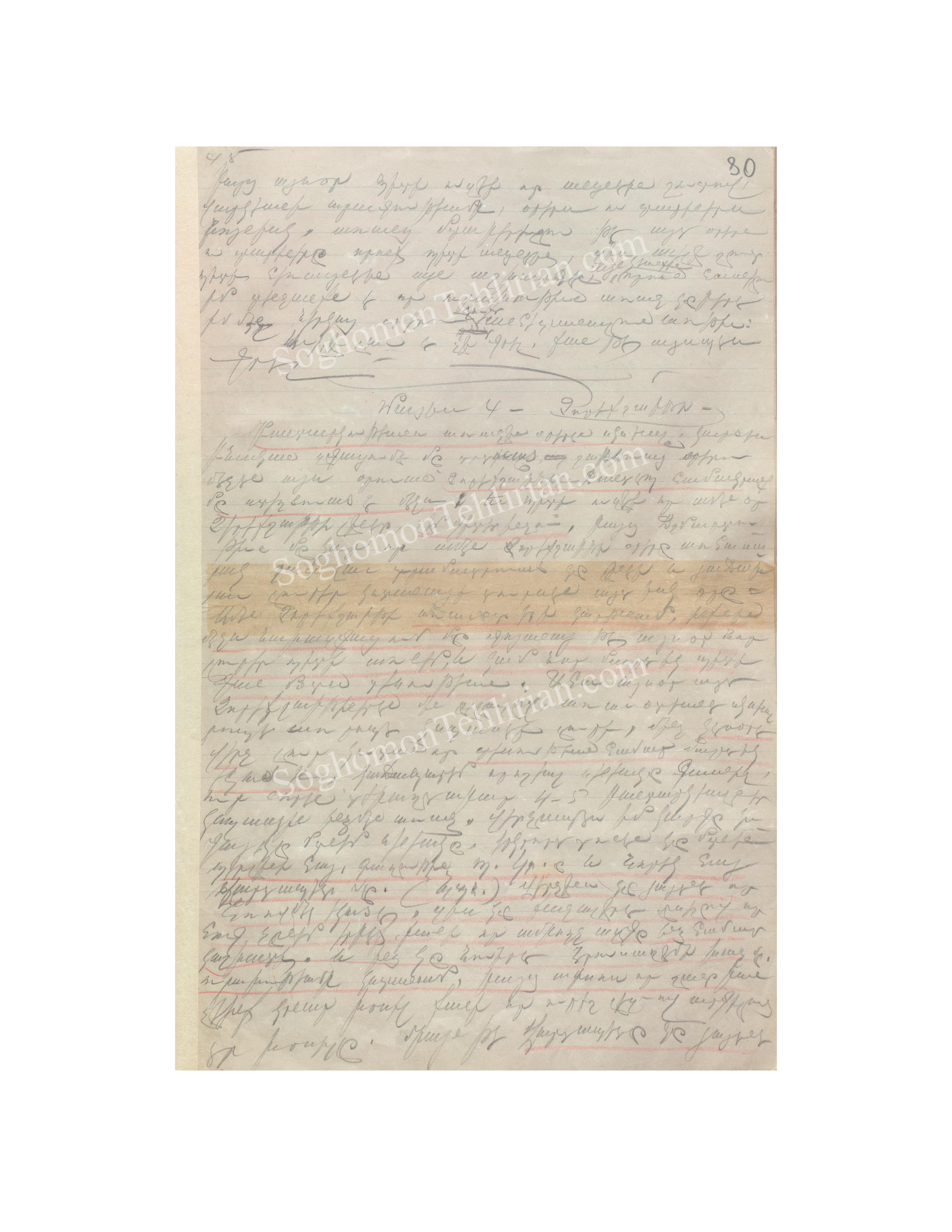
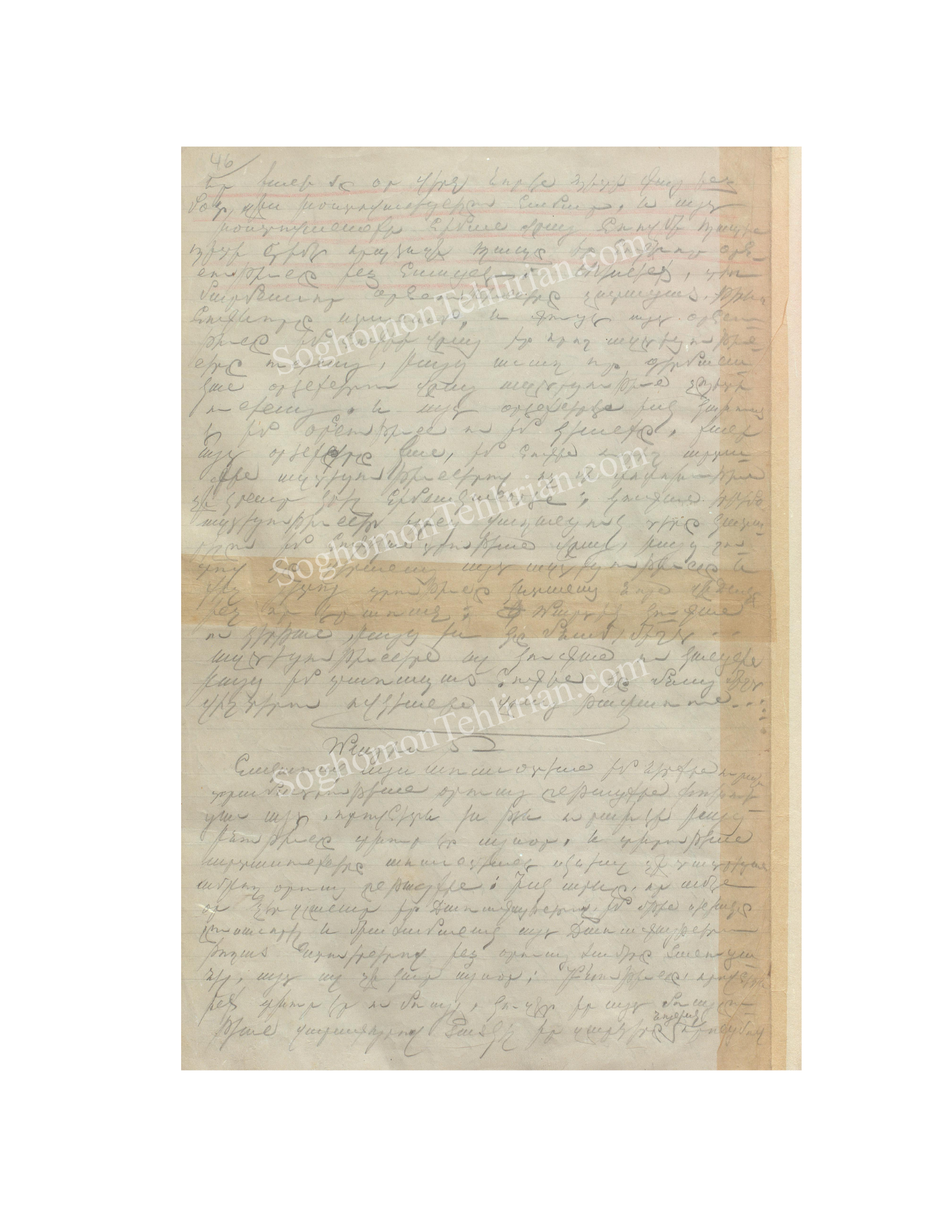
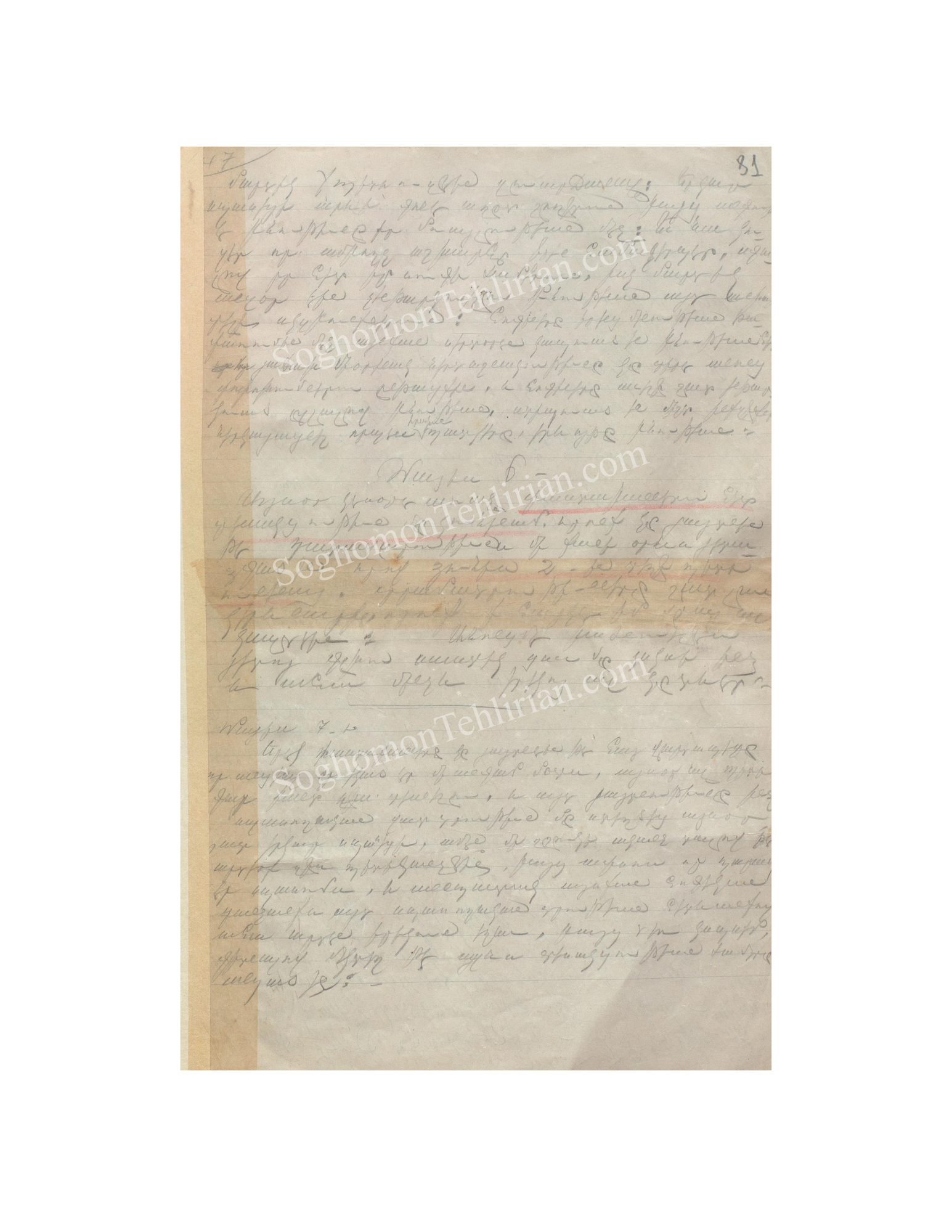
Pages 45, 46, & 47 of Soghomon Tehlirian’s Prison Diary written in early May, 1921. On Sunday, according to his memoir Soghomon was visited by the prison chaplain, a Protestant. Shortly thereafter he received an Armenian language Bible and immediately set to reading it, and interpreting it in light of his circumstances, particularly, assigning meaning to the “beast” in the Revelation of St. John. On Wednesday he was visited by an Armenian Vartabed (abbott/priest), who gave him a Jerusalem cross.
Posted: MARCH 15, 2026
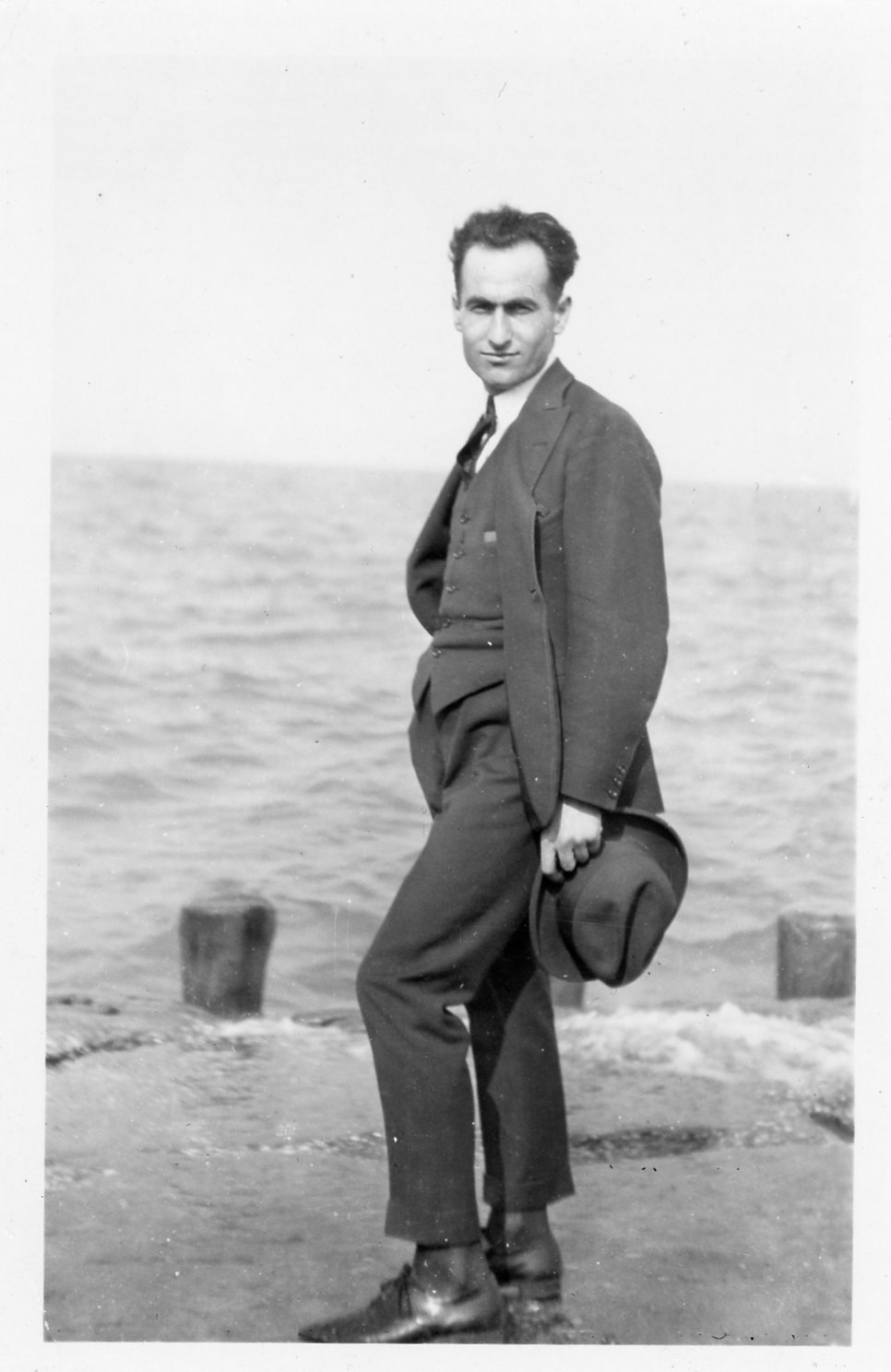
May 28, 1923
Soghomon Tehlirian
USA, Chicago/Great Lake (?): Confirmation pending
More data pending
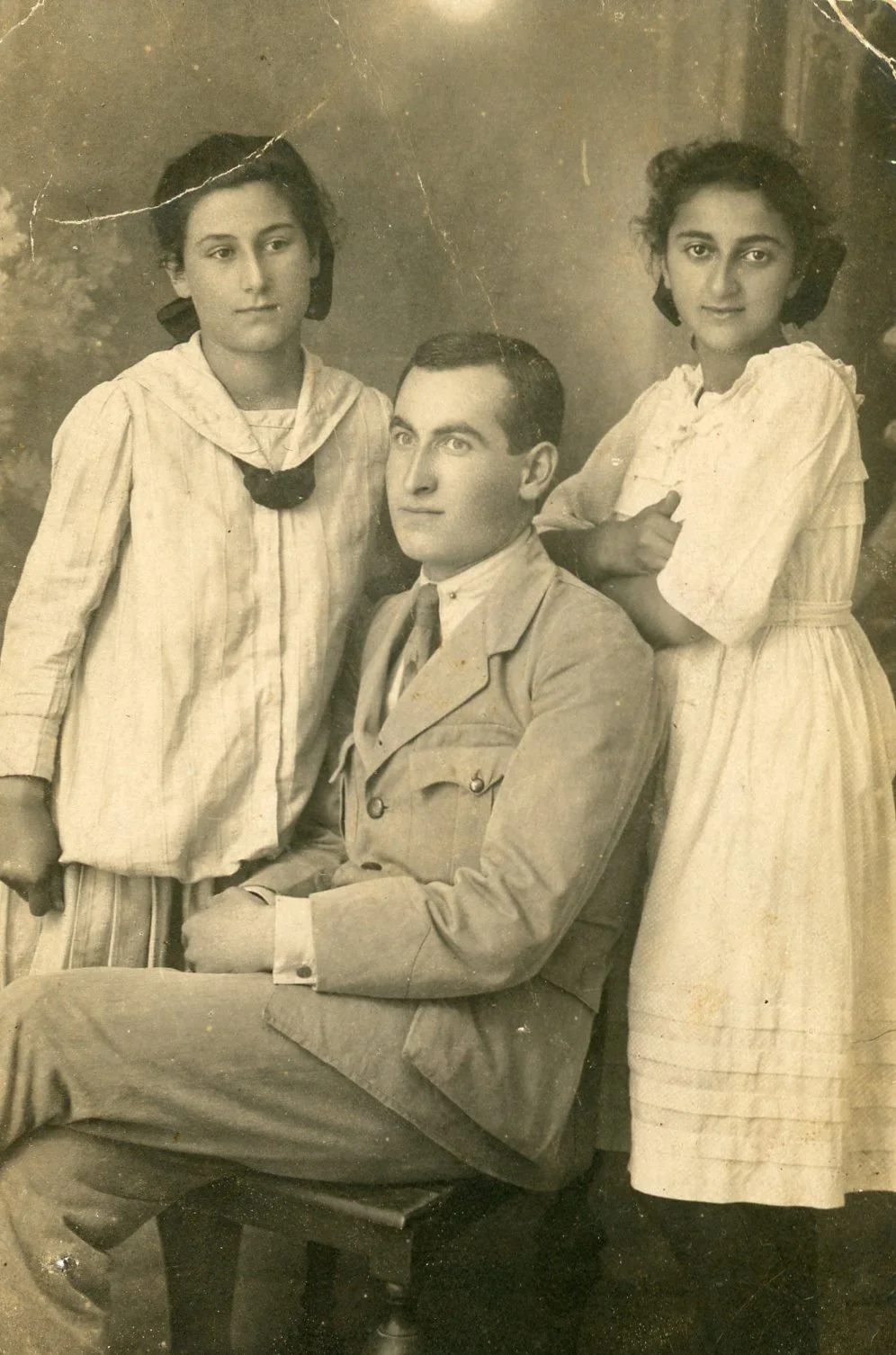
July, 19, 1919
(L) Armenuhi Tehliran, Niece (Rescued from Kurd harem)
(C) Soghomon Tehliran
(R) Cousin/Sister (?) - Tatikian Family: Confirmation pending
Valjevo, Serbia
More data pending
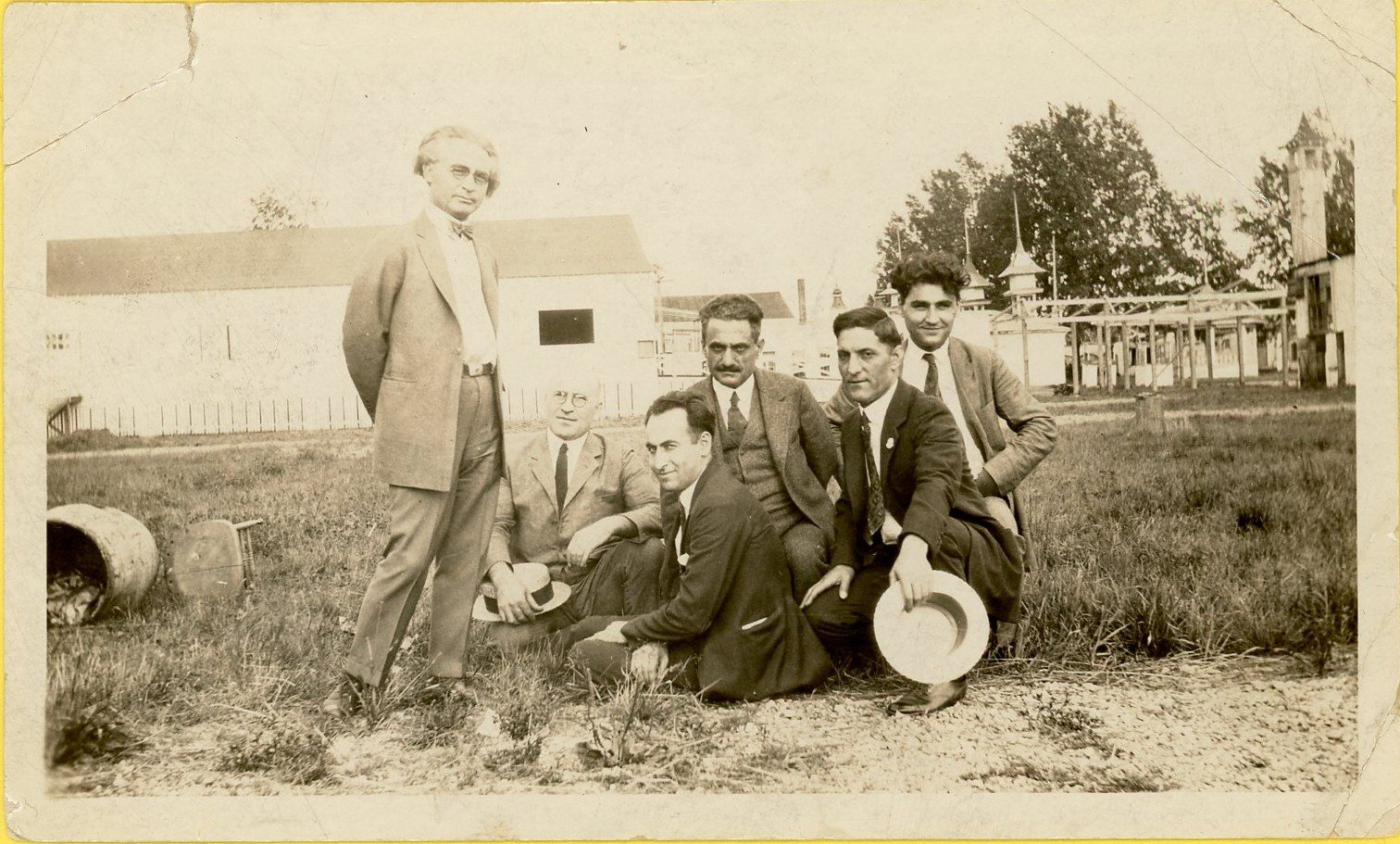
1923/24 (?)
(L-Standing) Shahan Natalie
(C-Seated) Soghomon Tehlirian
More data pending
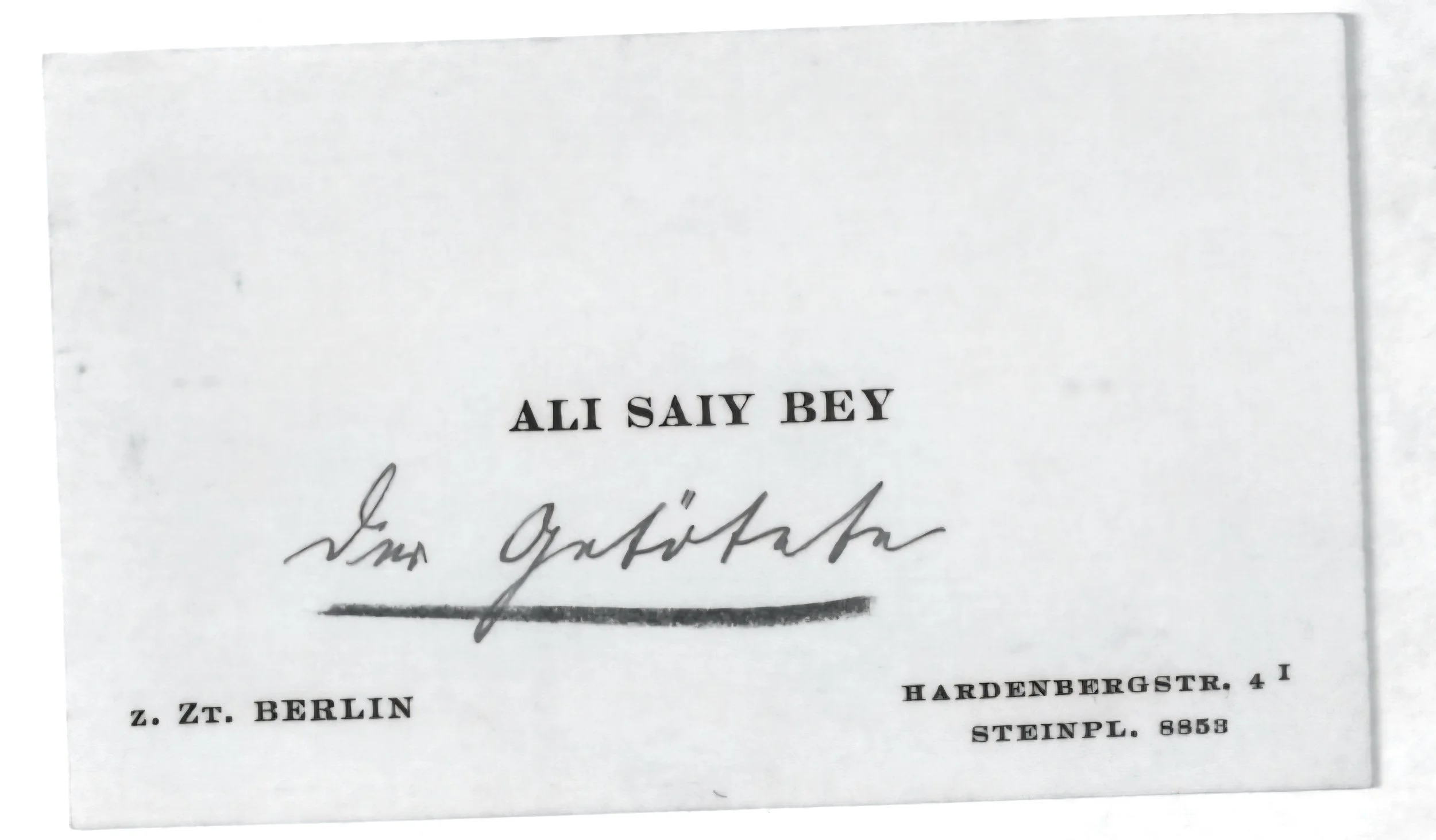
March 15, 1921
Business Card of: “Ali Saiy Bey”
Berlin Address: 4 Hardenbergstrasse
German handwriting: “Der Getötete”
Translation: “The killed one” [the one who was killed]
From the pockets of Soghomon’s victim.
The following is the first installment of an interview conducted by Michael, a manager at Project Justice, LLC exactly five years ago today (from the date of this first post: 03/15/26).
A HUNDRED Years later
AN INTERVIEW WITH SOGHOMON’S SON - MARCH 15, 2021
“I never heard my father say one bad thing about Turks.”
Aside from his mother (Soghomon’s wife, Anahid), no one on the planet knew Soghomon Tehlirian better than the 91 year old gentleman sitting across from me. And in the span of three years, and at least 20 in depth conversations, this was the fourth or fifth time he had shared this same sentiment. Usually it came up spontaneously as an important insight into his father’s character. But for this interview, on this special centennial, I wondered if I could draw it out of him again.
“What did your father think of Turks?”
“I never heard— he spoke Turkish you know— I never heard my father say one bad thing about Turks. He never said he hates Turks. My father didn’t hate anybody.And I don’t hate Turks. Why should I? This is like four generations later…. [T]he only thing I hold against Turks, not what they did to my people, because the Turks didn’t do it. ______ _____ did it. You think that all the Russians in Russia are like Stalin?…. The only thing I resent is that up till today, they say it didn’t happen. I mean, what kind of a nerve do you have to have to say something that is proven time and time again, with no doubt… because ‘It was a civil war.’ It’s not even a joke. That I hold against them, period. Hate them? No. I don’t hate anybody.”
“And those are your fathers values, how he raised you?”
“Exactly. That’s the way he was.”
Armenian revolutionaries lionize Soghomon Tehlirian as a master assassin with ice in his veins, while Turkish propagandists demonize him as a terrorist consumed by bloodlust. But the truth is, he was neither. On the contrary, Soghomon was an average Joe, a good hearted ‘everyman’, a sensitive soul. As a teenager he had already developed a love for poetry, and was an avid student of history. He planned to study abroad to attain a degree in engineering. Then, perhaps, he’d fall in love and raise a family in the picturesque Anatolian paradise his people had called home for thousands of years. He was a man of humble aspirations.
But a few months after Soghomon’s 18th birthday, 19 year old Gavrilo Princip shot and killed Archduke Franz Ferdinand, and the world was plunged into an unprecedented maelstrom of horror. And none more horrific than what would befall the women and children of the Tehlirian clan, indeed, all the Armenians trapped within the eastern borders of the Ottoman Empire. Now, with his entire world violently ripped out from under him, that goodness in Soghomon’s heart became laser focused on a righteous mission, a mission that would haunt him unrelentingly until its’ completion.
It’s an incredible story that I was shocked to learn. How had this watershed moment in history, the first documented megadeath of an ethno-religious minority, gone all but ignored by the world for a century? Now that it’s finally been translated into English, I’m fully convinced that Soghomon’s personal account has the potential to reverse that trend. Soghomon’s son, however, begs to differ.
“So… now… this being translated into English… I don’t believe it’s going to be a very desired book, [not] very often taken out of the library, being read by English speaking people. I don’t see why anybody would want to read that.”
It stings when he says this. Not because I think he’s wrong, but because he may be right. In frustration, I fire back.
“You haven’t read it, so you don’t know.”
“Pardon me?”
“You haven’t read it, so you don’t know.”
“No, no… I mean it’s something that I— most the people—just because they don’t know that that happened. There are a lot of things people don’t know that happened in the past five hundred years.”
“But what he did got headlines—“
“That doesn’t mean anything to an average American.”
“Justice?…. Justice is a huge theme in movies and stories.”
“It’s a phony subject.”
“Justice?”
“Justice doesn’t really exist. It depends from which angle you look at it.”
“Your father didn’t do something to bring justice?”
The tension in my voice betrays my irritation. I’ve become combative. He usually doesn’t relent.
“Look… you can… if somebody says something to them… No. I’m not going to say it because you’re recording.”
I laugh.
“No. I’m not, but you… you got me on a subject that has nothing to do with my father.”
I decide to change the subject for the time being. Even if he doesn’t readily see the value in his father’s personal account, I believe many people will.
“What would you say to people who will read your father’s memoir?”
“I don’t know what I would say. I don’t know why I would even comment on it. I don’t. Look, I’m his son and I didn’t read it. I didn’t read his memoirs. I could have read… when there was the first published, I could have read in Armenian. I would read very well. I probably wouldn’t understand half of it because the language is too fancy.But why would I read it to begin with? I know what happened. I know my father. I’m not interested in reading his memoirs.”
Touché.
Against this I have no argument. To him, Soghomon Tehlirian was not a larger-than-life hero, nor an arch villain, he was simply “Father”, and even, closest friend. But knowing someone and knowing about someone are two different things.
[to be continued)